
Catechesis
Preparing for Confirmation
O God, who wonderfully created, and yet more wonderfully restored, the dignity of human nature: Grant that we may share the divine life of him who humbled himself to share our humanity, your Son Jesus Christ our Lord; who lives and reigns with you, in the unity of the Holy Spirit, one God, for ever and ever. Amen.
Week 1 — Gospel, Transformation, and Faith
Topics:
- Sin as alienation; salvation as reconciliation
- God’s plan of transformation
- Essential Christian beliefs
Salvation (Q.1–17)
What is the human condition?
Though created good and made for fellowship with our Creator, humanity has been cut off from God by self-centered rebellion against him, leading to lawless living, guilt, shame, death, and the fear of judgment. This is the state of sin. (Genesis 3:1–13; Psalm 14:1–3; Matthew 15:10–20; Romans 1:18–23; 3:9–23)
— Q. 1
What is the Gospel?
The Gospel is the good news that God loves the world and offers salvation from sin through his Son, Jesus Christ. (Psalm 103:1–13; Isaiah 53:4–5; John 3:16–17; 1 Corinthians 15:1–5)
— Q. 2
How does sin affect you?
Sin alienates me from God, my neighbor, God’s good creation, and myself. Apart from Christ, I am hopeless, guilty, lost, helpless, and walking in the way of death. (Genesis 3:14–19; Psalm 38; Isaiah 53:6; 59:1–2; Romans 6:20–23)
— Q. 3
Is there any other way of salvation?
No. The apostle Peter said of Jesus, “There is salvation in no one else” (Acts 4:12). Jesus is the only one who can save me and reconcile me to God. (Psalm 2; Isaiah 42:1–4; John 14:5–6; 1 Timothy 2:5–6)
— Q. 9
What does God desire to accomplish in your life in Christ?
God desires to free me from captivity to sin and transform me into the image of Jesus Christ, by the power of his Holy Spirit. (Exodus 33:18–23; 34:29–35; Psalm 27:4, 7–14; Matthew 17:1–9; Romans 6:5–11; 2 Corinthians 3:12–18)
— Q. 16
By what means will God transform you into the image of Jesus Christ?
The first Christians “devoted themselves to the apostles’ teaching and the fellowship, to the breaking of bread and the prayers” (Acts 2:42). Following this pattern, I will be transformed within the life of the Church through reading Scripture and receiving the sacraments, through worship and prayer, and through fellowship with God’s people and loving witness to the world. (Deuteronomy 6:1–9; 2 Chronicles 7:1–3; Psalm 1; Acts 2:42–47; Hebrews 10:23–25)
— Q. 17
What does it mean for you to have faith?
To have faith means that I believe the Gospel is the truth: that Jesus died for my sins, rose from the dead, and rules over my life. Therefore, I entrust myself to him as my Savior, and I obey him as my Lord. (Psalm 40:1–10; Proverbs 3:5–8; John 1:9–13; Romans 10:9–10; Hebrews 11:1, 6)
— Q. 12
How can you repent and put your faith in Jesus Christ?
With God’s help, I can acknowledge and turn from my sins, receive the gift of God’s grace in Jesus Christ, and embrace the new life he freely gives me. (Psalm 86:1–7; Joel 2:32; Acts 16:30–34; Romans 10:11–13; Hebrews 12:1–2)
— Q. 13
What should you do as the sign of your repentance and faith?
After receiving instruction in the faith, I should be baptized into the death and resurrection of Jesus Christ, thus joining his Body, the Church. If I have already been baptized, I should confess my sins, seek the guidance of a minister, affirm the promises made at my Baptism, and take my place as a member of the Church. (Psalm 51:5–7; Ezekiel 36:25–27; Matthew 28:19–20; 1 Corinthians 12:13; 1 Peter 3:18–22)
— Q. 14
What We Believe
Concerning the Creeds (Q.18–24)
What is the purpose of the creeds?
The purpose of the creeds is to declare and safeguard for all generations essential truths about God, the Church, and the world, as revealed in Holy Scripture. (Deuteronomy 7:9–11; Psalm 145:4–13; John 20:30–31; 2 Timothy 1:13–14; Hebrews 2:1–4)
— Q. 19
We have no doctrine of our own—we only possess the Catholic doctrine of the Catholic Church enshrined in the Catholic creeds, and those creeds we hold without addition or diminution.
— Archbishop Geoffrey Fisher
ACNA Statement of Beliefs (abbreviated)
-
We confess the Bible to be the inspired Word of God, containing all things necessary for salvation, and to be the final authority and unchangeable standard for Christian faith and life.
-
We confess Baptism and the Supper of the Lord to be Sacraments ordained by Christ Himself.
-
We confess the godly historic Episcopate as an inherent part of the apostolic faith and practice.
-
We confess as proved by most certain warrants of Holy Scripture the historic faith of the undivided church as declared in the three Catholic Creeds: the Apostles’, the Nicene, and the Athanasian.
-
We affirm the seven Councils of the undivided Church, in so far as they are agreeable to the Holy Scriptures.
-
We receive The Book of Common Prayer as a standard for Anglican doctrine and discipline, and as the standard for the Anglican tradition of worship.
-
We receive the Thirty-Nine Articles of Religion of 1571, as expressing the fundamental principles of authentic Anglican belief.
Week 2 — Scripture and Creed
Topics:
- Scripture as the church’s rule of faith and life
- The Word incarnate as the center of the word written
- The Creeds as a boundary of belief
Holy Scripture (Q. 25–35)
Holy Scripture contains all things necessary for salvation. Consequently whatever is not read in Scripture nor can be proved from Scripture cannot be demanded from any person to believe it as an article of the faith. Nor is any such thing to be thought necessary or required for salvation.
— Thirty Nine Articles of Religion, Article 6
The Old Testament is not contrary to the New, for in both the Old and New Testaments eternal life is offered to mankind through Christ.
— Thirty Nine Articles of Religion, Article 7 (abbreviated)
Why is Jesus Christ called the Word of God?
The fullness of God’s revelation is found in Jesus Christ, who not only fulfills the Scriptures, but is himself God’s Word, the living expression of God’s mind. The Scriptures testify about him, “In the beginning was the Word,” and “The Word became flesh and dwelt among us” (John 1:1, 14). Therefore, “ignorance of the Scriptures is ignorance of Christ.” (Jerome, Commentary on Isaiah, prologue; see also Genesis 1:26–27; Psalm 33:1–12; Colossians 1:15–19)
— Q. 32
How should Holy Scripture be understood?
Because Holy Scripture was given by God to the Church, it should always be understood in ways that are faithful to its own plain meaning, to its entire teaching, and to the Church’s historic interpretation. It should be translated, read, taught, and obeyed accordingly. (Nehemiah 8:1–8; Psalm 94:8–15; Acts 8:26–35; 18:24–28; Jerusalem Declaration, Article 2; Articles of Religion, 20)
— Q. 33
In some matters, things are so obvious that even men of ordinary intelligence can readily distinguish truth from falsehood and good from evil. The things necessary to our salvation are of this sort, whether it has to do with things to be affirmed or denied or with things to be done or avoided. This is why Augustine says such things are not only set down, but plainly set down in Scripture, so that whoever hears and reads may understand without great difficulty. Other things of lesser importance must be done by Christians, but because they are more obscure, intricate, and difficult to judge, God has called some men to spend all their time studying them so that in doubtful cases they might be alike light to direct others.
— Richard Hooker, On the Laws of Ecclesiastical Polity
The Apostles’ Creed (Q. 36–120)
I believe in God, the Father almighty,
creator of heaven and earth.
I believe in Jesus Christ, his only Son, our Lord.
He was conceived by the Holy Spirit
and born of the Virgin Mary.
He suffered under Pontius Pilate,
was crucified, died, and was buried.
He descended to the dead.
On the third day he rose again.
He ascended into heaven,
and is seated at the right hand of the Father.
He will come again to judge the living and the dead.
I believe in the Holy Spirit,
the holy catholic Church,
the communion of saints,
the forgiveness of sins,
the resurrection of the body,
and the life everlasting. Amen.
— The Apostles’ Creed, Book of Common Prayer 2019
The Father (Q. 36–47)
Why do you call the first of the three divine Persons “Father”?
Our Lord Jesus Christ is the only divine Son of the Father. He called God “Father” and taught his disciples to do the same. God gives believers his Holy Spirit and adopts us as his children, enabling us to call him “Father.” (Deuteronomy 32:4–9; Psalm 2; Matthew 6:6–9; John 5:17–23; Galatians 4:1–7)
— Q. 39
Was the world that God created good?
Yes. God created all things and called them “very good” (Genesis 1:31). However, through sin, evil and death have come into the world and corrupted it. (Genesis 3:1–8; Psalm 14:1–3; Matthew 15:18–20a; Romans 1:18–32; 1 Timothy 4:4–5)
— Q. 45
The Son (Q. 48–83)
What does “Christ” mean?
Christos is the Greek term for the Hebrew title Messiah, meaning “Anointed One.” Old Testament kings, priests, and prophets were anointed with oil. Jesus the Christ was anointed by the Holy Spirit to perfectly fulfill these roles, and he rules now as Prophet, Priest, and King over his Church and all creation. (Exodus 40:12–16; 1 Samuel 16:11–13; 1 Kings 19:15–16; Psalm 89:19–29; Luke 3:21–22; 4:14–21; Acts 10:38; Hebrews 4:14–5:10)
— Q. 50
Why is it important to say that Jesus was born?
It is important to affirm that he is one of us: truly human, born to a human mother, and raised in a human family. (Luke 2:41–52; Hebrews 2:17–18)
— Q. 55
What did Jesus accomplish on the Cross?
Jesus fulfilled the Scriptures by dying on the Cross as a sacrifice for sin in obedience to his Father. He thereby showed the depth of the love of God for his fallen creation, satisfying the justice of God on our behalf and breaking the power of sin, Satan, and death. (Leviticus 23:18–21; Psalm 34:15–22; Colossians 2:13–15; Hebrews 10:11–14)
— Q. 64
What does the Creed mean when it affirms that Jesus rose again from the dead?
It means that Jesus was not simply resuscitated; God restored him physically from death to life in his resurrected body, never to die again. His tomb was empty; Jesus had risen bodily from the dead. The risen Jesus was seen by his apostles and hundreds of other witnesses. (Psalm 30:1–5; Luke 24:1–12; John 20:1–18; Acts 1:3; 1 Corinthians 15:3–8)
— Q. 69
For I delivered to you as of first importance what I also received: that Christ died for our sins in accordance with the Scriptures, that he was buried, that he was raised on the third day in accordance with the Scriptures, and that he appeared to Cephas, then to the twelve. Then he appeared to more than five hundred brothers at one time, most of whom are still alive, though some have fallen asleep. Then he appeared to James, then to all the apostles. Last of all, as to one untimely born, he appeared also to me.
— 1 Corinthians 15:3–8 (ESV)
Week 3 — Spirit and Church
Topics:
- The Spirit’s work: enlightening, calling, transforming, equipping
- The church as God’s mission in the world
The Spirit (Q. 84–91)
What are the particular ministries of the Holy Spirit?
The Holy Spirit imparts life to every living thing in creation, reveals God’s Word to his people, and calls sinners to a new life of faith in the saving and life-giving work of Jesus. The Holy Spirit unites Christians to Jesus, indwelling them, convicting them of sin, giving them spiritual gifts, and bearing spiritual fruit in their lives. (1 Samuel 16:13; Psalm 143:7–12; Isaiah 11:2; Joel 2:28–29; John 15:26; 16:7–11; Acts 4:5–31)
— Q. 86
What is the fruit of the Holy Spirit?
The fruit of the Holy Spirit is the very character of Jesus developing in us through the work of the Holy Spirit: “love, joy, peace, patience, kindness, goodness, faithfulness, gentleness, self-control.” (Galatians 5:22–25; see also Matthew 7:15–20; 12:33–35)
— Q. 89
What are the gifts of the Holy Spirit?
Among the many gifts of the Holy Spirit named in the New Testament are faith, healing, miracles, prophecy, discernment of spirits, other languages (“tongues”), the interpretation of other languages, and words of wisdom and knowledge. The Spirit distributes gifts to individuals as he wills for the sake of the Body of Christ. Other gifts in the New Testament include administration, service, encouragement, evangelism, teaching, giving, leadership, and mercy. Jesus promises that the Father will give the Holy Spirit to those who ask. (Luke 11:13; Romans 12:3–8; 1 Corinthians 12:7–31; Ephesians 4:7–11; 1 Peter 4:10–11)
— Q. 90
The Church, Forgiveness, and Life (Q. 92–120)
What is the Church?
The Church is the whole community of faithful Christians in heaven and on earth, called and formed by God into one people. The Church on earth gathers to worship God in Word and Sacrament, to serve God and neighbor, and to proclaim the Gospel to the ends of the earth. (Exodus 19:4–6; Psalm 22:22–23; Matthew 28:19–20; Ephesians 2:11–22; 1 Peter 2:4–10; Articles of Religion, 19)
— Q. 92
Why is the Church called “catholic”?
The Church is called “catholic” (“according to the whole”) because it keeps the whole faith it has received from the Lord, in continuity with the whole Church, in all times and places. (Micah 4:1–4; Acts 2:1–11; 1 Corinthians 15:1–8; 2 Timothy 1:13–14; Jude 3; Revelation 5:9–10)
— Q. 98
Why is the Church called “apostolic”?
An apostle is one who is sent. The Church is called “apostolic” because it holds the faith of the first apostles sent by Christ. In continuity with them, the Church is likewise sent by Christ to proclaim the Gospel and to make disciples throughout the whole world. (Matthew 10:1–4, 40–42; 28:18–20; Acts 2:42; 13:1–4; Ephesians 2:19–21)
— Q. 99
How do you participate in the communion of the saints?
I live as a member of the communion of saints through faith in Jesus Christ and the work of the Holy Spirit by gathering to worship God with my fellow Christians, by praying for and encouraging one another, and by coming to one another’s aid in times of trouble, sickness, or grief. (Psalm 133; Acts 2:42–47; Colossians 3:16; 1 Thessalonians 5:11–18; Hebrews 10:24–25; James 5:13–20)
— Q. 103
How does God forgive your sins?
By virtue of Christ’s atoning sacrifice, in which I put my trust, God sets aside my sins, accepts me, and adopts me as his child and heir in Jesus Christ. Loving me as his child, he forgives my sins whenever I turn to him in repentance and faith. (Leviticus 26:40–45; Psalm 78:35–39; Matthew 26:27–28; Luke 15:11–32; 2 Corinthians 5:16–21; Galatians 4:1–7)
— Q. 107
What is the resurrection of the body?
When the risen Lord Jesus returns to judge the earth, he will raise all the dead to bodily life. The wicked will then receive eternal condemnation, and the righteous eternal life in the glory of God. (Psalm 16; Ezekiel 37:1–14; Daniel 12:1–3; Matthew 25:31–34, 41, 46; John 5:25–29; 1 Thessalonians 4:13–17; Revelation 20:11–15)
— Q. 116
Week 4 — Sacrament and Polity
Topics:
- Sacraments and God’s gifts
- Authority, service, and submission
Sacraments (Q. 121–153)
What is a sacrament?
A sacrament is an outward and visible sign of an inward and spiritual grace. God gives us the sign as a means by which we receive that grace and as a tangible assurance that we do in fact receive it. (Genesis 17:1–21; John 6:53–58; Romans 2:25–29; 1 Corinthians 10:16; 1662 Catechism)
— Q. 121
Baptism and Communion (Q. 126–136)
What is the inward and spiritual grace given in Baptism?
The inward and spiritual grace is death to sin and new birth to righteousness, through union with Christ in his death and resurrection. I am born a sinner by nature, separated from God. But in Baptism, through faith in Christ and the gift of the Holy Spirit, I am made a member of Christ’s Body and adopted as God’s child and heir. (Psalm 51:1–2, 7–10; Ezekiel 36:25–26; John 3:3–5; Romans 6:1–11; Colossians 2:9–14)
— Q. 127
Why is it appropriate to baptize infants?
Because it is a sign of God’s promise that they are embraced in the covenant community of Christ’s Church. Those who in faith and repentance present infants to be baptized vow to raise them in the knowledge and fear of the Lord, with the expectation that they will one day profess full Christian faith as their own. (Deuteronomy 6:6–9; Proverbs 22:6; Mark 2:3–5; Acts 2:39; 16:25–34)
— Q. 129
Baptism Liturgy (from The Book of Common Prayer)
The Celebrant examines the Candidates who can speak for themselves, and the Godparents and Sponsoring Parents who will speak on behalf of infants or young children, saying
Do you renounce the devil and all the spiritual forces of wickedness that rebel against God?
I renounce them.
Do you renounce the empty promises and deadly deceits of this world that corrupt and destroy the creatures of God?
I renounce them.
Do you renounce the sinful desires of the flesh that draw you from the love of God?
I renounce them.Almighty God deliver you from the powers of darkness and evil, and lead you into the light and obedience of the kingdom of his Son Jesus Christ our Lord. Amen.
Do you turn to Jesus Christ and confess him as your Lord and Savior?
I do.
Do you joyfully receive the Christian Faith, as revealed in the Holy Scriptures of the Old and New Testaments?
I do.
Will you obediently keep God’s holy will and commandments, and walk in them all the days of your life?
I will, the Lord being my helper.
Why did Christ institute the sacrament of Holy Communion?
He instituted it for the continual remembrance of the sacrifice of his atoning death, and to convey the benefits of that sacrifice to us. (Exodus 24:1–10; Psalm 23:5–6; Luke 22:17–20; John 6:25–51; 1 Corinthians 10:16–17)
— Q. 131
What is the outward and visible sign in Holy Communion?
The visible sign is bread and wine, which Christ commands us to receive. (1 Corinthians 11:23–26)
— Q. 132
What is the inward gift signified?
The inward gift signified is the Body and Blood of Christ, which are truly taken and received in the Lord’s Supper by faith. (Deuteronomy 8:1–20; Psalm 78:17–29; John 6:52–56; 1 Corinthians 10:1–4, 16–18)
— Q. 133
Other Sacramental Acts (Q. 137–153)
What is confirmation?
Confirmation is the laying on of the bishop’s hands with prayer for strengthening by the Holy Spirit, following a period of catechetical formation. In confirmation, I make a mature confession of faith, publicly renewing the vows and promises made at my Baptism. (Deuteronomy 6:4–25; Psalm 119:33–40; Acts 8:14–17; 2 Timothy 1:6–7)
— Q. 137
What is ordination?
Ordination is the laying on of the bishop’s hands with prayer, which confirms the gifts and calling of the candidates, consecrates them, and grants them authority to serve Christ and his Church in the office to which they have been called. (Isaiah 6:1–8; Luke 9:1; Acts 6:1–7; 13:1–3; 1 Timothy 3:1–13; 4:14; 5:22; Titus 1:5–9)
— Q. 140
What is Christian marriage?
Christian marriage, or Holy Matrimony, is a lifelong covenant between one man and one woman, uniting them in self-giving love, joy, and faithfulness. It is ordained by God for the procreation and spiritual nurture of children, the sanctification of husband and wife, the mutual support of their common life, and the flourishing of family, church, and society. Husband and wife enter into this covenant by exchanging vows before God and in the presence of witnesses. (Genesis 2:18–25; Song of Solomon 4:7–10; Matthew 19:3–9; John 2:1–11; Romans 7:2–3; Hebrews 13:4; see questions 322–23)
— Q. 146
What is absolution?
In absolution, a priest, acting under God’s authority, pronounces God’s forgiveness in response to repentance and confession of sin. (2 Samuel 12:1–13; Proverbs 28:13; John 20:22–23; James 5:15–16)
— Q. 149
What is the anointing of the sick?
Through prayer and anointing with oil, the minister invokes God’s blessing upon those suffering in body, mind, or spirit. (1 Kings 17:17–24; Psalm 107:17–22; Matthew 8:14–17; 10:5–8; Acts 28:8; James 5:15–16)
— Q. 152
Orders and Polity
What is the work of all Christians?
All Christians are to bear witness to Christ in their lives; to care for the poor, strangers, widows, and orphans; and, according to their gifts, to serve Christ in the world and in the Church. (Zechariah 7:9–10; Psalms 1; 15; Micah 6:6–8; Colossians 3:1–17; James 1:27; 1 Peter 4:8–11)
— Q. 143
The mission of the Province is to extend the Kingdom of God by so presenting Jesus Christ in the power of the Holy Spirit that people everywhere will come to put their trust in God through Him, know Him as Savior and serve Him as Lord in the fellowship of the Church.The chief agents of this mission to extend the Kingdom of God are the people of God.
— ACNA Constitution, III.1
What is the work of bishops?
Bishops represent and serve Christ and the Church as chief pastors, catechists, and missionaries in the tradition of the apostles. They are to confirm and ordain, and to guard the faith, unity, and discipline of the Church. (Isaiah 61:1–11; John 20:19–23; 21:15–19; Acts 20:17–35; 1 Timothy 3:1–7; Titus 1:7–9; 1 Peter 5:1–5; Ignatius of Antioch, Letter to Polycarp 1.2–2.2)
— Q. 143
What is the work of priests?
Serving Christ with their bishops, priests (or presbyters) nurture God’s people through the ministry of Word and Sacrament and pronounce absolution and blessing in God’s Name. (Genesis 14:17–20; Psalm 132:8–18; Luke 10:1–9; John 10:1–16; Ephesians 4:7–13)
— Q. 144
What is the work of deacons?
Serving Christ under their bishops, deacons care for those in need, assist in public worship, and instruct both young and old in the catechism. (Deuteronomy 15:7–11; Psalm 119:1–8; Luke 12:35–40; Acts 6:1–7; 1 Timothy 3:8–13)
— Q. 145
The Local Church
The Rector shall lead the Church as pastor, priest, and teacher, sharing in the councils of this Congregation and of the whole Church, in communion with the Bishop of the ADGL. By word and action, at all times informed by and consistent with the Holy Scriptures, the Book of Common Prayer, and the Constitution and Canons of the Anglican Church in North America and of the ADGL, the Rector shall proclaim the Gospel, love and serve Christ’s people, nourish them, and strengthen them to glorify God in this life and in the life to come. — Christ Our Hope Bylaws, IX.A — Duties of the Rector
It shall be the duty of the Vestry to take care that the financial affairs of the Congregation are administered faithfully, the property of the Congregation is adequately maintained, the salary of the Rector, other clergy and lay staff is paid regularly, and provision is made for payment of the current expenses of the Congregation. — Christ Our Hope Bylaws, VII.B — Duties of the Vestry
Week 5 — Prayer and Worship
Topics:
- Prayer as relationship with God
- Liturgy and formation
Prayer (Q. 154–223)
Our Father, who art in heaven,
hallowed be thy Name,
thy kingdom come,
thy will be done,
on earth as it is in heaven.
Give us this day our daily bread.
And forgive us our trespasses,
as we forgive those
who trespass against us.
And lead us not into temptation,
but deliver us from evil.
For thine is the kingdom,
and the power, and the glory,
for ever and ever. Amen. — The Lord’s Prayer, Book of Common Prayer 2019
Why should you pray?
I should pray because God calls me to do so, because I was made for fellowship with him, because I need the help of his Holy Spirit, and because he has promised to answer the prayers of his people. (Exodus 33:7–11; Psalm 50:14–15; Matthew 7:7–11; Luke 18:1–8; Romans 8:26; 1 Timothy 2:1)
— Q. 157
What should you pray?
I should pray the Lord’s Prayer, the Psalms, the collected prayers of the Church, and my own prayers as the Spirit leads me. (1 Samuel 2:1–10; Psalms 2; 62:8; Luke 1:46–55; 2:25–35; Acts 4:24–30; Romans 8:26–27; Revelation 4:8–11)
— Q. 158
How is the Lord’s Prayer a pattern for prayer?
The Lord’s Prayer models the primary types of prayer: praise of God, intercession for his rule, petition for his provision and protection, and confession of sins. I should pray regularly in all these ways. (Psalm 150; Isaiah 63:7–64:12; Acts 9:36–43; 3 John 2)
— Q. 163
When you pray for God’s kingdom to come, what are you asking?
I pray that the whole creation may be renewed and restored under its rightful Lord, now in part and fully in the age to come. (Psalm 72; Daniel 7:27; Mark 14:25; Romans 8:19–25; Philippians 2:9–11; Revelation 11:15–18; 21:5)
— Q. 180
What do you pray for as you seek God’s will?
I pray for God to break the dominion of the world, the flesh, and the devil; to establish justice and thwart the plans of the wicked; to strengthen and direct his Church; and to extend the kingdom of his grace. (Psalm 10:17–18; Matthew 16:17–18; Luke 18:7–8; Ephesians 6:10–20; 2 Thessalonians 3:1–2; 1 Timothy 2:1–4)
— Q. 185
Why should you forgive others?
I should forgive others because, while I was still a sinner, God forgave me through Jesus Christ. Failing to forgive impedes God’s work in my life and gives opportunity to the evil one. (Genesis 50:15–21; Psalm 133; Matthew 18:21–35; Luke 23:34; Ephesians 4:30–32; Colossians 3:12–13)
— Q. 199
Corporate Worship
Why do Anglicans worship with a structured liturgy?
Anglicans worship with a structured liturgy because it embodies biblical patterns of worship, fosters reverence and love for God, deepens faith in Jesus Christ, and is in continuity with the practices of Israel and the Early Church. (Numbers 6:22–27; Deuteronomy 12:8–14; Psalm 96; Acts 2:42–47; Revelation 15; Didache 8–10)
— Q. 245
Survey of the Book of Common Prayer
- The Daily Office (and Family Prayer)
- Holy Communion
- The Psalter
- Collects and Occasional Prayers
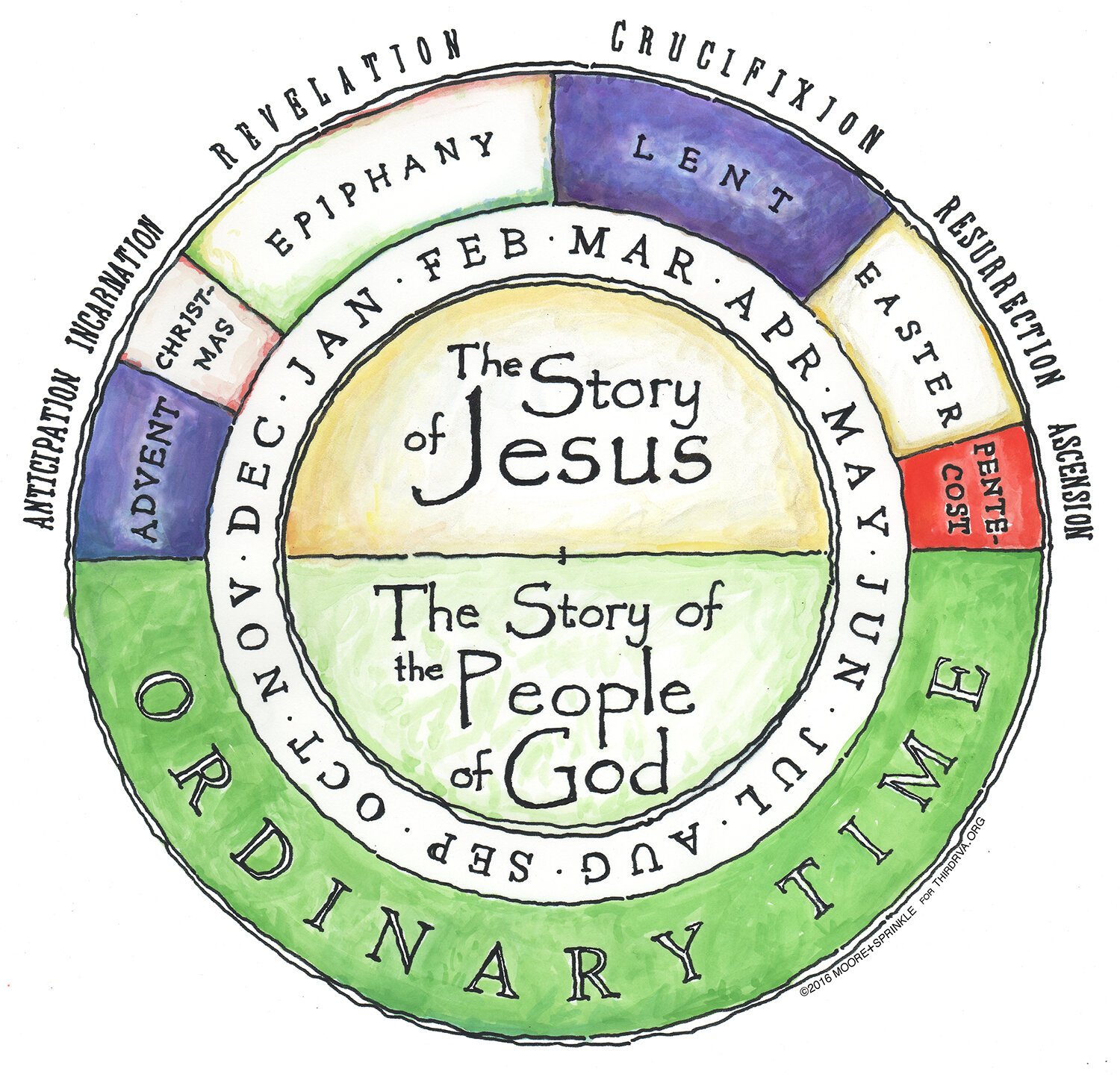
- The Calendar
Week 6 — Walking in the Way
Topics:
- The call to missional service
- Rule of life — seeking transformation with intention
- Ordered loves and God’s command
Duties of the People of God
According to ACNA Canon I.10, the people of the church are not passive members. They are “chief agents” of the Church’s mission, and every lay member is to become “an effective minister of the gospel of Jesus Christ.”
ACNA Canon I.10.2 — Concerning Duties of the Laity
With the help of God’s grace, it shall be the duty of every member of the Church:
- To worship God, the Father, and the Son and the Holy Spirit, every Lord’s Day in a Church unless reasonably prevented;
- To engage regularly in the reading and study of Holy Scripture and the Doctrine of the Church as found in Article I of the Constitution of this Church;
- To pray regularly for their needs and those of others, for the Church and its mission, and for the concerns of the world;
- To observe their baptismal vows, to lead an upright and sober life, and not give scandal to the Church;
- To present their children and those they have led to the Lord for baptism and confirmation;
- To give regular financial support to the Church, with the biblical tithe as the minimum standard of giving;
- To practice forgiveness daily according to our Lord’s teaching;
- To receive worthily the Sacrament of Holy Communion as often as reasonable;
- To observe the feasts and fasts of the Church set forth in the Anglican formularies;
- To affirm and follow the biblical standards of sexual morality and ethics in Canon II.8;
- To continue their instruction in the Faith so as to remain an effective minister for the Lord Jesus Christ;
- To serve their neighbor, sacrificially demonstrating the love of Christ to the poor, the sick and those in need.
- To devote themselves to the ministry of Christ and the proclamation of the Gospel among those who do not know Him, utilizing the gifts that the Holy Spirit gives them, for the effective extension of Christ’s Kingdom.
Personal Devotion (Q. 224–255)
How should the Holy Scriptures shape your daily life?
I should “hear them, read, mark, learn, and inwardly digest them” that by the sustaining power of God’s Word, I may grow in grace and hold fast to the hope given to me in Jesus Christ. (Collect for the Second Sunday of Advent, Book of Common Prayer 2019; see also Deuteronomy 6:4–9; Psalm 119:1–48; Luke 2:39–52; James 1:18–27; 2 Peter 3:18)
— Q. 227
What is the Daily Office?
The Daily Office includes the services of Morning and Evening Prayer. In them we confess our sins and receive absolution, hear God’s Word and praise him with psalms, and offer the Church’s thanksgivings and prayers. (Psalms 5; 63; Daniel 6:10; Mark 1:35)
— Q. 249
What is a rule of life?
A rule of life is a discipline by which I order my worship, work, and leisure as a pleasing sacrifice to God. (Deuteronomy 6:1–9; Psalm 103; John 15:1–15; Romans 12:1–2; Colossians 3:12–17)
— Q. 252
Why do you need a rule of life?
I need a rule of life because my fallen nature is disordered, distracted, and self-centered. A rule of life helps me to resist sin and establish godly habits, through which the Holy Spirit will increasingly conform me to the image of Christ. (Psalms 73; 86:11–13; Proverbs 3; 1 Corinthians 9:23–27; Colossians 3:1–4; 1 Peter 1:13–19)
— Q. 253
What is included in a rule of life?
In addition to Scripture, prayer, and worship, a rule of life includes witness, service, self-denial, and faithful stewardship of my time, money, and possessions. (Deuteronomy 5:28–33; Psalm 141; Matthew 5:13–16; 6:19–24; Mark 8:27–38; 1 Peter 4:10–11)
— Q. 254
The Decalogue (Q. 256–356)
- Love God rightly. “I am the Lord your God, who brought you out of the land of Egypt, out of the house of slavery. You shall have no other gods before me.” (Exodus 20:2–3)
- Worship rightly. “You shall not make for yourself a carved image, or any likeness of anything that is in heaven above, or that is in the earth beneath, or that is in the water under the earth. You shall not bow down to them or serve them, for I the Lord your God am a jealous God, visiting the iniquity of the fathers on the children to the third and the fourth generation of those who hate me, but showing steadfast love to thousands of those who love me and keep my commandments.” (Exodus 20:4–6)
- Honor God’s Name. “You shall not take the name of the Lord your God in vain, for the Lord will not hold him guiltless who takes his name in vain.” (Exodus 20:7)
- Keep holy time. “Remember the Sabbath day, to keep it holy. Six days you shall labor, and do all your work, but the seventh day is a Sabbath to the Lord your God. On it you shall not do any work, you, or your son, or your daughter, your male servant, or your female servant, or your livestock, or the sojourner who is within your gates. For in six days the Lord made heaven and earth, the sea, and all that is in them, and rested on the seventh day. Therefore the Lord blessed the Sabbath day and made it holy.” (Exodus 20:8–11)
- Honor authority. “Honor your father and your mother, that your days may be long in the land that the Lord your God is giving you.” (Exodus 20:12)
- Protect life. “You shall not murder.” (Exodus 20:13)
- Honor marriage and chastity. “You shall not commit adultery.” (Exodus 20:14)
- Steward property. “You shall not steal.” (Exodus 20:15)
- Speak truth. “You shall not bear false witness against your neighbor.” (Exodus 20:16)
- Resist covetousness. “You shall not covet your neighbor’s house; you shall not covet your neighbor’s wife, or his male servant, or his female servant, or his ox, or his donkey, or anything that is your neighbor’s.” (Exodus 20:17)
Hear what our Lord Jesus Christ says: You shall love the Lord your God with all your heart and with all your soul and with all your mind. This is the first and great commandment. And the second is like it: You shall love your neighbor as yourself. On these two commandments depend all the Law and the Prophets. — The Summary of the Law, Book of Common Prayer 2019 (Matthew 22:37–40)
Week 7 — Sanctification and Service
Topics:
- Healing that transforms
- Confirmation: proclamation and commissioning
Forgiveness and Healing (Q. 357–368)
Is it possible for you to keep these commandments?
No. I fail to keep them perfectly, however hard I try. They show me my inability to obey God’s Law and my need for God’s grace in Christ Jesus. (1 Kings 8:46; Psalms 53:2–3; 130:3; Proverbs 20:9; Ecclesiastes 7:20; Romans 3:9–20; 1 John 1:8, 10)
— Q. 357
Since you cannot perfectly keep God’s Law, what has Jesus done on your behalf?
As the perfect human and unblemished Lamb of God, Jesus lived a wholly obedient and sinless life. He suffered death for my redemption upon the Cross, offering himself once for all as a “full, perfect, and sufficient sacrifice, oblation, and satisfaction for the sins of the whole world.” (“Holy Communion, Anglican Standard Text,” Book of Common Prayer 2019; see also Isaiah 53:4–6; Mark 10:45; John 1:29; Romans 8:3–4; Colossians 2:13–15; Hebrews 10:10–14)
— Q. 358
Does God’s forgiveness excuse you from personal obedience?
No. God has reconciled me to himself and freed me from bondage to sin in order to conform me to the image of his Son. As I live each day in gratitude for God’s forgiveness, I seek to turn from sin and follow Christ in loving obedience. (John 14:15–24; Romans 6:1–14; 2 Corinthians 5:14–15; 1 John 3:4–10)
— Q. 361
Confirmation
The Anglican Church requires a public and personal profession of the Faith from every adult believer in Jesus Christ. Confirmation or Reception by a Bishop is its liturgical expression. Confirmation is clearly grounded in Scripture: the Apostles prayed for, and laid their hands on those who had already been baptized (2 Timothy 1:6–7; Acts 8:14–17; 19:6).
In Confirmation, through the Bishop’s laying on of hands and prayer for daily increase in the Holy Spirit, God strengthens the believer for Christian life in the service of Christ and his kingdom. Grace is God’s gift, and we pray that he will pour out his Holy Spirit on those who have already been made his children by adoption and grace in Baptism.
At the direction of the Bishop, and after public reaffirmation of their baptismal promises, those having made adult professions of faith in other Christian traditions (including those confirmed in other traditions) are received into the Anglican Church with prayer and the laying on of hands by a Bishop.
Confirmed believers who are already members of this Church (including those received from other traditions as above, those returning to active Christian discipleship after lapsing, and those experiencing a renewal of Christian commitment or significant life transition) may also reaffirm the pledges made to Christ and his Church with prayer and the laying on of hands by a Bishop.
— Preface to Confirmation, Book of Common Prayer 2019
Review Confirmation Liturgy